Is It True That Honey Bees Dance to Communicate?
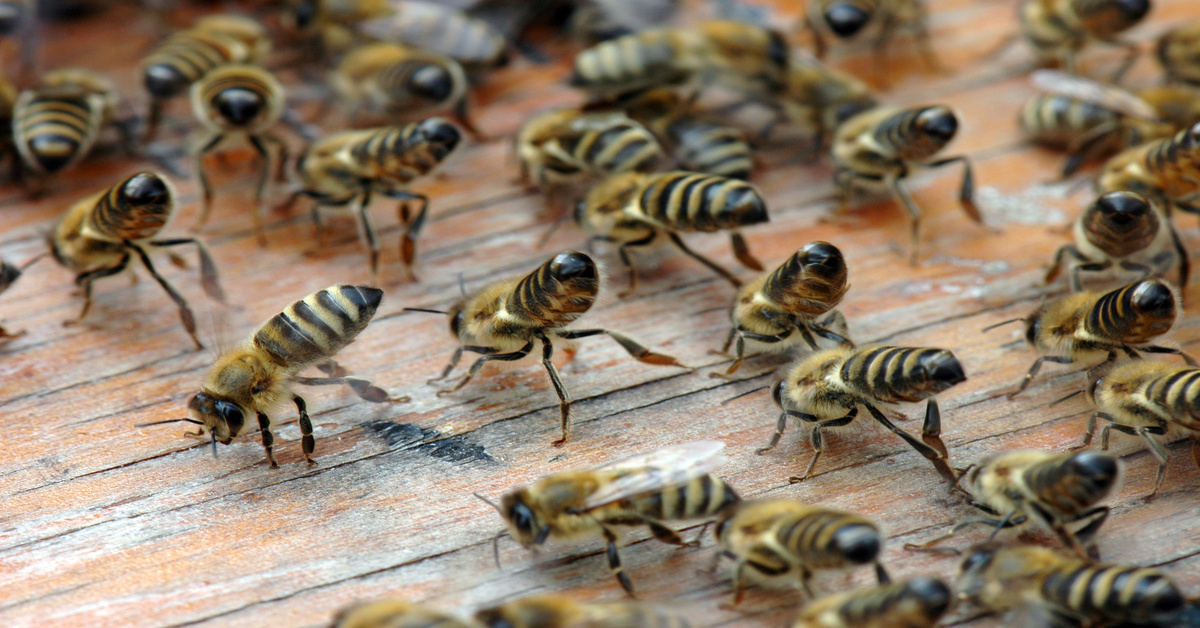
You’ve probably heard people say honey bees “dance” to talk to each other. It’s one of those weird facts that gets thrown around but never fully explained.
Are they really dancing? What does that even mean? And if they are, how exactly does it help the rest of the hive? Let’s break down where that idea came from, what bees are actually doing, and why it matters.
Is It True?
Is it true that honey bees dance to communicate? The answer to this question is a bit complicated.
Honey bees use a specific set of movements to communicate inside the hive. This behavior was first studied and confirmed by Austrian scientist Karl von Frisch in the mid-20th century, and his work earned him a Nobel Prize.
To the bees, this isn’t “dancing” the way humans think of it. There’s no rhythm or intention to perform. Each movement follows a functional pattern that signals things like direction, distance, or urgency. It’s simply how they share information. But to researchers observing from the outside, the repeated and structured movements looked like dances, and the term stuck.
Still, the meaning behind those movements is clear. They tell other bees where to find nectar, pollen, water, or potential new hive locations. What’s wild is how consistent this behavior is across different hives, regions, and even generations. It’s a language built into how they operate.
What Kinds of Dances Do Bees Do?
Honey bees use a few specific dances, each with its own purpose. The three most studied and well-understood are the waggle dance, the round dance, and the tremble dance. Each one helps the colony operate smoothly and make decisions collectively.
Waggle Dance
This is the most well-known and widely studied of all honey bee dances. Karl von Frisch was the first to decode its meaning, and it’s where most of the early research focused. What made it stand out was how much detail bees could pack into just a few seconds of movement.
What It Looks Like:
The bee runs in a straight line while waggling its abdomen side to side. Then it circles back around in a loop to do it again.
What It’s For:
This dance is used to communicate the location of food sources that are more than about 150 feet from the hive. The angle of the straight run shows the direction of the food source relative to the sun. The duration of the waggle part tells how far away it is.
Why It Works:
Bees can detect subtle variations in dance patterns. Even in a dark hive, they use their antennae and other sensors to pick up on the movement and vibrations, allowing them to decode the message accurately.
Round Dance
The round dance was identified before scientists fully understood the waggle dance. It was the first hint that bees used movement for communication, even if it took time to figure out what they were saying. It’s simpler than the waggle dance, but still plays an important role in foraging behavior.
What It Looks Like:
The forager bee walks in a tight circle, alternates directions, and repeats. There’s no waggle phase.
What It’s For:
This dance tells other bees that food is close—usually within 50 to 150 feet of the hive. It doesn’t give direction, just a “there’s something nearby, go check it out” message. Other bees then leave the hive and use smell and sight to find it.
Why It Works:
When food is close, exact directions aren’t necessary. The round dance acts like an alert, signaling the colony that there’s something good right outside the front door.
Tremble Dance
This dance wasn’t studied as early or as deeply as the waggle and round dances, but researchers later recognized its role in regulating hive activity. It doesn’t signal food—it helps manage the hive’s internal operations when nectar is coming in faster than it can be processed.
What It Looks Like:
The bee moves slowly across the comb, shaking its body side to side while touching other bees.
What It’s For:
The tremble dance tells other bees to start processing nectar. It often happens when a returning forager finds that there aren’t enough receiver bees to take the nectar load. The dancer is essentially saying, “We need more help over here.”
Why It Works:
It helps balance the hive’s internal workflow. Foragers, receivers, and processors all need to stay in sync, and this dance helps with that.
Why Dancing Over Other Communication Methods?
Dance is an unusual way for a social species to communicate. Most animals share information by making sounds, releasing chemicals, or using visual signals like posture or color changes. So why have bees chosen such a physical, movement-based method?
Precise Navigation Without Technology
Bees can’t draw maps or use GPS. Dancing lets them communicate both direction and distance with a level of precision that’s rare in the animal world. Other species might use calls or scents, but those don’t convey distance or direction nearly as clearly.
When a bee waggles at a 30-degree angle to the left of vertical, it’s signaling that the food is 30 degrees left of the sun’s position. The length of time spent in the waggle portion translates into distance. A one-second waggle might signal something about 1,000 meters away. That’s incredibly specific for a creature with a brain smaller than a sesame seed.
Works in the Hive’s Environment
Hives are dark and crowded. Sound-based or visual communication would struggle in that space. But dance-based movement—picked up by touch and vibration—travels well in those conditions. Other bees feel the dance through their legs and antennae, which is more reliable than hearing or seeing in the low-light, high-noise hive environment.
Keeps the Colony Efficient
Honey bee colonies can have tens of thousands of workers. The dance language helps bees avoid wasted trips and focus on the most promising food sources. Instead of randomly foraging, workers head straight for what’s been reported as the best find.
The system also self-corrects. If a food source dries up, bees stop dancing for it, and interest fades. New dances for new sources take over. It’s a constant, self-updating system that works without any central controller.
Bees Don’t Just Dance—They Inform
Is it true that honey bees dance to communicate? To bees, the intricate movements they make are just a way to share information—but to us, they look like dancing, so that’s what we call them.
Understanding the different dances that honey bees use is a must for beekeepers, who need to understand common bee behaviors if they want to effectively manage their hives. For everyone else, it offers a fascinating glimpse into how an entire society operates without speaking. Isn’t it kind of wild that a few waggles can tell an entire hive where to go and what to do? It’s one more reason bees are some of the most interesting insects on the planet.